Like its departed golf tour, now bankrupt, or the postponed Asian Winter Games, Saudi Arabia has scaled back its sports spending amid heightened geopolitical tensions stemming from the war with Iran. While football will likely be affected, the kingdom is unlikely to extricate itself from the situation.
Has Saudi Arabia's golden retirement package or irresistible contracts for young European players come to an end? Affected by the war with Iran, the Kingdom of Saudi Arabia has scaled back several large projects in the past few months. For example, the Troyes ski resort, originally planned to be built in the desert to host the 2029 Asian Winter Games, was ultimately moved to Kazakhstan.
Another major Saudi sporting project has recently fallen into decline: the Saudi professional golf tour, which defected from the LIV and its promised multi-million dollar prize money to the world's top players, declared bankruptcy this week. Just months earlier, Saudi Arabia had announced it was withdrawing its funding, becoming its sole sponsor. Will the Saudi professional league and its exorbitantly priced star players be the next victims?
"The Saudi professional league is very likely to be privatized."
“This shows that priorities, strategies, and levels of investment are changing, especially with investment contracting,” said Jean-Baptiste Guegan, a sports geopolitics expert. “Everyone assumes Saudi Arabia has unlimited funds. That’s not the case at all. LIV is an example, and it certainly won’t be the only one. It’s foreseeable that investment in Saudi professional leagues and all other sectors will be privatized, bringing about real differences.”
The war with Iran and the obstruction of the Strait of Hormuz forced the Kingdom to "secure the two coastlines" and thus readjust its investment direction against the backdrop of rising "strategic and systemic risks".
Given the current period of conflict and heightened public sensitivity, Crown Prince Mohammed bin Salman has initiated a campaign to "reduce extravagant investments." Jean-Baptiste Guegan added, "With war looming on our doorstep, continuing to push these extravagant sporting events is not the best strategy."
"Saudi Arabia's investment in football is likely to be more rational."
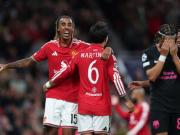
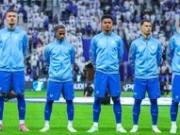
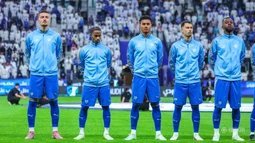
Saudi clubs spent nearly €500 million in the summer transfer window, leading some to believe there was a protective bubble between sports investment and external events. However, the reality is different. The signings were primarily concentrated in three clubs: Al-Hilal (€205 million, including €70 million for Gabriel Martinelli from Arsenal), Al-Qadisiyah (€90 million), and Al-Ahli Jeddah (€84 million), followed by Al-Union Jeddah (€33 million) and Al-Nassr Al-Hilal (€22 million). "You can't confuse the transfers of big clubs with the overall budget of the Saudi professional league," emphasized Jean-Baptiste Guegan. "Spending in the Saudi professional league is actually decreasing, even though big clubs are active and are securing various contracts. The key is to look at who is paying for these contracts."
With eight years to go before Saudi Arabia hosts the 2034 World Cup, football remains a vital asset for the kingdom. However, Saudi Arabia is scaling back its investment in the sport.
He explained, "We won't abandon an asset once it has just gained value. There's always a logic to it, and we will continue to invest. It also depends on who's paying for it, because in recent transfers, there have been individuals, private entities, and national entities involved, and not all of them are being paid for by the same party. Perhaps in the long run, Saudi Arabia's investment in football will be more rational and reasonable."
Golf, however, lacks these same strategic implications. Jean-Baptiste Geigan acknowledged: “It was certainly not a priority. The investment was huge, but the return on public image fell far short of expectations. We paid too high a price for a value, only to encounter a strong backlash from an extremely conservative circle, and we failed to get golfers to take sides. Despite spending a lot of money, LIV never achieved consensus or agreement. This leaves a mark because it's not a small matter; people won't forget it. This cost isn't just about reputation; it also demonstrates your credibility, and this isn't the first time Gulf states haven't paid; Saudi Arabia is one of them.”