
Marca uses Fermín López's personal experience to voice its opposition to school bullying.
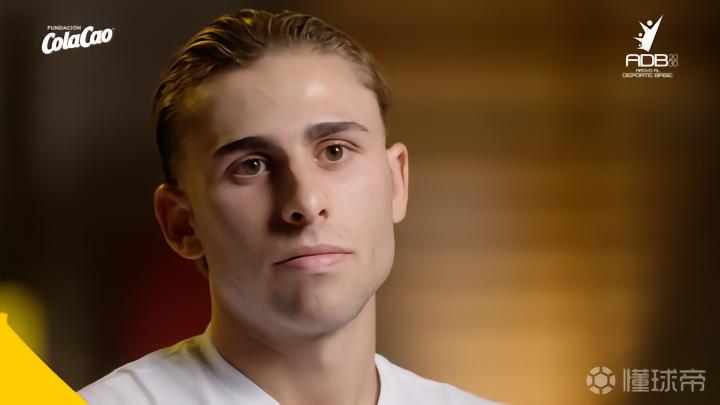
Fermín López is no ordinary player. He's used to overcoming setbacks, as seen when a broken right toe prevented him from missing the World Cup a few months ago. Now we learn that his adolescence was equally difficult, marked by hurtful comments about his short stature, which severely impacted his emotions, mental well-being, and social life. The Barcelona midfielder is one of the athletes who publicly opposes school bullying. In the audiovisual project "Training Against Bullying," a collaboration between the Caracau Foundation and several other organizations, he candidly shared his experiences. This Spanish international, who has long been dedicated to the fight against bullying, opened up candidly and sincerely to Marca, recounting his past.
Q: What do you think it means to partner with the Karakau Foundation on this anti-bullying project?
A: For me, it is both an honor and a responsibility to be able to contribute to this initiative at the Karakau Foundation. I feel that I have a certain influence and can help this project reach a wider audience, so I am very happy and proud.
Q: Because you can also share your personal experience. You went through a difficult time during your adolescence. Could you talk about the comments you received at that time, and what that painful experience was like...?
A: Yes, I did experience some teasing, mainly because of my height and build, which made me feel inferior during my formative years. That period was tough, but I got through it with the help of my family and those who love me and whom I love. I went through a very difficult time because of my physical condition. People always joked about "Fermin, little guy." At first, you might find it funny, it seems like just a joke, and you wouldn't take it to heart. But after it was repeated many times, things changed…
Q: How did these experiences affect you?
A: You might feel like you can't compete with your peers, that you're not strong enough, and you're shorter... That situation can make you feel inferior and create insecurity. It's painful to see yourself unable to reach or catch up. You'll also drift apart from your teammates. I had many tough times alone in my room. That anxiety was bottled up inside. I watched my chance slip away... Everyone else was playing, and I wasn't. My teammates looked like adults, and I didn't... It was a difficult period.
Q: And you experienced all of this at a very sensitive age, around 14 to 16 years old, a time when a person's personality is gradually forming... How did this affect you? Do you think it changed your personality and made you different?
A: Yes, because in the end, those terrible experiences became my learning process. Although I was very young at the time and perhaps not emotionally mature enough, looking back now, I see them as a kind of growth experience. They helped me mature and shaped who I am today.
Q: You may isolate yourself, feel uneasy, frustrated, and anxious... But because of these taunts, have you ever thought about giving up football or doubting your career path?
A: No, I've never doubted my career, but I have doubted myself many times because I have a disadvantage: my physical condition. I also saw that I couldn't do the same things as my teammates, or play the kind of football I wanted to play. So, that period was very frustrating, all caused by these negative thoughts stemming from my physical condition.
Q: Although you, like many children and young people who have experienced bullying, chose to isolate yourself, you also mentioned the support of your family. I think that talking about these things and telling your closest relatives about your situation is the key to getting out of this deep pit.
A: Yes, it's important to talk about these things; you have to come out of your heart. For me, my family, especially my parents, are the people I confide in most often. They always give me more positive emotions and help me turn things around little by little during that terrible period. They've always been there to pull me up and keep me from sinking. I tell them everything on my mind, and they also help me find my strength when I lack motivation to train.
Q: I imagine the people at La Masia also helped you through that time. Which staff members, teammates, or coaches gave you the greatest support?
A: At La Masia, I always felt deeply loved and cared for, both by the educators and by all the teammates I met there. They gave me a lot of support in this regard; it was a very warm environment for me, and it was because of them that I was able to grit my teeth and get through it. They would give me a hug when I needed it. Although I was far from my family, having them around was like having another family, helping me turn things around, or rather, helping me get through that difficult time.
Q: You had to endure tremendous psychological pressure at a very young age...
A: Yes, I will take these comments as motivation. The coach not letting me play because I'm short, or people saying I'm short, won't make me lose my passion, dreams, or motivation. On the contrary, it will make me work harder and more diligently. I believe that one day I will succeed, and I believe they will remember me. I also want to send this message to the children who are currently suffering.
Q: If a young person is listening to you, watching you, or reading this, and is experiencing something similar at school or on a football team, what advice would you give them?
A: I would tell him that no matter how bad things get, he shouldn't doubt himself, and should only listen to and trust those who truly love him. I would also tell him that he must talk out his problems and negative thoughts so that his family and loved ones can help him. Everyone should know that we all have great strengths, and I think everyone should be with people who truly love them. I would tell them to learn to love themselves first. You must believe in yourselves. I'm not tall, and I've heard those comments, but I've achieved my dreams. What you look like doesn't matter.
Q: What would you say to the child who made hurtful comments and bullied others?
A: I would mainly tell him to be more empathetic, because you might think it's just a joke or sarcasm, but you don't know how it might affect another person. I would tell him that the most important thing is to put yourself in the other person's shoes, because any seemingly innocuous remark could make the other person feel inferior or insecure.
Q: From what I understand, Messi and Iniesta also helped you a lot, helping you through that difficult period. What kind of indirect support did they provide?
A: They are my role models, mainly because of how they are as players and how they perform on the field. I also feel that their physical condition during childhood or adolescence is somewhat similar to mine. Seeing two such great people, the best in the world, turn things around in those tough moments made me project myself onto them. They taught me that being small doesn't necessarily make you feel inferior. On the contrary, you can develop other football skills to help yourself, such as making decisions faster… They helped me never doubt myself and believe that I could achieve my dreams.
Q: School bullying is a persistent problem that thousands of children suffer from: some studies indicate that by 2025, 12.3% of students in Spain will have experienced such problems. But do you think there is more exposure of bullying or ridicule now?
A: I think there's definitely more attention being paid to it now, and people are more aware of its importance and know they need to speak out. However, there's still a lot of work to be done to completely eradicate these problems. We must continue our efforts and ensure that all bullied children can speak out and not keep it bottled up.
Q: So what role do you think social media plays in this? Although the issue is more transparent now, social media has also given people more tools to commit violence, such as cyberbullying and artificial intelligence. Don't you think so?
A: Yes. We are increasingly aware of the influence of social media, and its destructive power in bullying. It's incredibly harmful because it amplifies everything a thousandfold. Information reaches many people, and behind the screen, you could do something very dangerous to a child, to someone who is suffering. Any comment can create anxiety or make someone feel inferior, making their difficult time even harder. A simple comment can cause immense harm.
Q: Do you believe bullying is a structural problem in society? What measures would you take to eradicate it?
A: It's not easy, but I think we should all work together to try and end bullying. We must educate people with good values. This needs to be done in families, schools, clubs, and any sporting or social setting. Eradicating bullying requires a collective effort; everyone needs to participate. I believe that over time, it's gaining more attention and slowly being eliminated, and people are becoming more aware, but I think there's still a long way to go. I want to emphasize again that clubs, families, schools… we should all continue to instill values like respect and empathy so that we can gradually eliminate it from a young age.
Q: A few months ago, we went through what Ronald Araujo experienced on social media. He received a lot of criticism, went through a difficult period, and ultimately took a month-long hiatus from football. Many adult players and public figures also had to close their accounts. What are your thoughts on what Araujo went through?
A: It was tough because he's my teammate and a friend in the locker room. It was really painful to see him in such a bad situation because of comments or social media. But I think the club, the locker room... are all very important. It's like a family environment, and we did our best to help him move forward and get through that period.
Q: How do you protect yourself from insults and malicious comments on social media?
A: The most important thing is to rely on the people around you. My family, friends, partner... And I know that I must maintain a certain distance from external matters and social media posts, because they are, after all, just comments written behind a screen by someone you don't know, someone who doesn't understand your experiences and daily life. So I think you need to take these comments less seriously, and at the same time, make some emotional adjustments so that they don't affect you.
Q: However, although those who insult you have no excuse and don't need any reason to support their criticism, I think you should only receive praise now because of your excellent start to the season...
A: Yes, I'm very happy now because I can play for the team again and score goals. This summer was tough, but it's all in the past, and I'm glad to be able to do what I love again and enjoy being on the pitch.