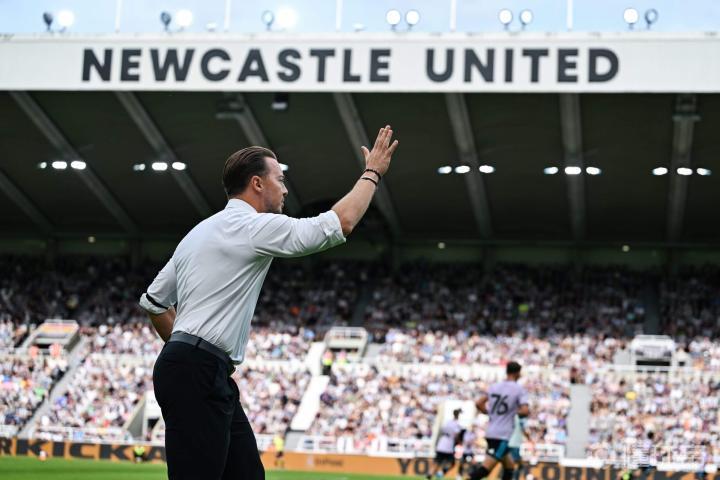
Even Newcastle United's management admitted that fans' "faith was tested" in yet another turbulent summer. During this volatile transfer window, the club sometimes had to engage in deep reflection, and they hoped that signing their "top target," Fernandez Pardo, on deadline day would "reward" their loyal fans. A new era has begun—young, vibrant, and exciting—driven by financial needs, a shift in the logic of football, and forged in the fires of adversity. The old era had achieved considerable success, leading them to the Champions League and winning a trophy, but also pushing the club to the brink; one insider called it a "time bomb." Like other interviewees in the article, he chose to remain anonymous to speak freely.
As club chief executive David Hopkinson told The Athletic, “Newcastle 2.0” isn’t about rewriting ambitions, but about laying a solid foundation. This means selling players well, buying young players, and avoiding the high-flying, high-flying model that nearly resulted in points deductions in England’s top flight and UEFA sanctions in June. Hopkinson said, “At some point, you have to pay your credit card bills.”
This also means remaining flexible and adaptable to unexpected situations, facing yet another wave of turmoil. The departures of Anthony Gordon, Tonali, and Guimarães, totaling £245 million including bonuses, made Newcastle the fifth highest-paid club in the world. Subsequently, Walter Madd joined Juventus on loan on Tuesday, temporarily ending this expensive and stylistically incompatible signing – a deal that had thrown Eddie Howe's Newcastle United off balance.
With the signing of eight players, all 24 years of age or younger, at a total cost of approximately £300 million (including add-ons), Newcastle United became the fourth highest-spending club in the world. Following the dismissal of Javier Jaissler and his appointment as the 38-year-old German manager, coupled with the announcement of plans for a new £190 million training facility, Newcastle embraced this "fresh impact." Their approach carries uncertainty and risk, but it has been calculated, and so far, at least, the results are positive; an unbeaten start to the season in three games, the team is building momentum.
Last season, Newcastle United finished 12th in the English top flight. While they performed better in the Champions League and domestic cup competitions, the team appeared fatigued and overburdened. Relying solely on certainty wouldn't take them far. And that's precisely the problem: if the departures of Guimarães and Howe were never in the plan, then continuing as before is no longer an option.
A common analogy used within the club is renovating a house. Once you've torn down the walls, exposed the electrical wires, and made the stairs look dangerous, for a while, "it looks like a complete mess."
But Newcastle United pulled through. Now they no longer look like a mess. Under the leadership of Hopkinson and sporting director Ross Wilson, their work has been characterized by perseverance—with the full support of PIF (the Saudi Public Investment Fund, Newcastle United's major shareholder) and the assistance of Hakovo Solis and minority shareholder Jamie Ruben—and even when difficulties blurred the lines, the club has always maintained a clear direction. It feels like these experiences have actually strengthened the bonds between the club members.
One of their guiding principles stems from what happened 12 months ago: Newcastle United collapsed at the last minute, allowing Isak to join Liverpool for £125 million. That money was certainly good, but the timing was terrible, and the club scrambled to find a replacement, the repercussions of which are still felt today. Now, having sorted out those issues, significant changes have occurred; with the dust settled, the club has a clearer vision and is ready to move forward.
Most importantly, they all want to stay here. The belief continues.
Most of what Newcastle United is doing now can be summed up in one simple sentence: "We need to pull ourselves out of this mess first."
In late May, Newcastle United agreed to sell Gordon to Barcelona for a fee that could reach €80 million, and also signed Lewis Milly to a new contract. The timing of both moves was deliberately orchestrated. Newcastle United hoped to be a more efficient seller, completing the deal on their terms; while Milly's contract extension reflected their shift towards a younger squad and sent a signal: not everyone wants to leave.
The Gordon deal was quickly finalized, with Newcastle United receiving even more money than initially expected (based on a base of €70 million). However, this was still insufficient to completely resolve the issue. In June, Newcastle United were fined €6 million for violating UEFA regulations and reached a strict agreement with UEFA.
"It's driven by our economic realities," Hopkinson told The Athletic. "This sale essentially puts us back in compliance." The deal had to happen. "He had to go, and we needed him to go," an insider said.
Selling Tonali to Tottenham was intended to make room for necessary adjustments at Newcastle United. Like Gordon, Tonali made it clear he wanted to leave; his agent had been working on it since January. The move to Tottenham didn't look good on the surface—they finished 17th for two consecutive seasons—but for both the club and the player, the money was there. Newcastle United insisted on a £100 million asking price, refusing to budge, but ultimately got their way with only £7.5 million in add-ons.
Both players who wanted to leave got their wish, and the process was relatively smooth. However, Guimarães' situation is different. Newcastle United never intended for their captain and the team's tempo setter to leave. Ideally, they wanted the Brazilian international to lead the team's rebuilding process; the club was also considering how to incentivize their highest-paid player to stay. Perhaps a reasonable release clause in his new contract would persuade him to stay for another season?
After news broke in late June that Guimarães was determined to join Arsenal, Newcastle United's summer transfer window began to waver. It felt like a matter of life and death. They didn't want to sell players, but Howe felt it was almost a done deal, bringing him closer to leaving the club.
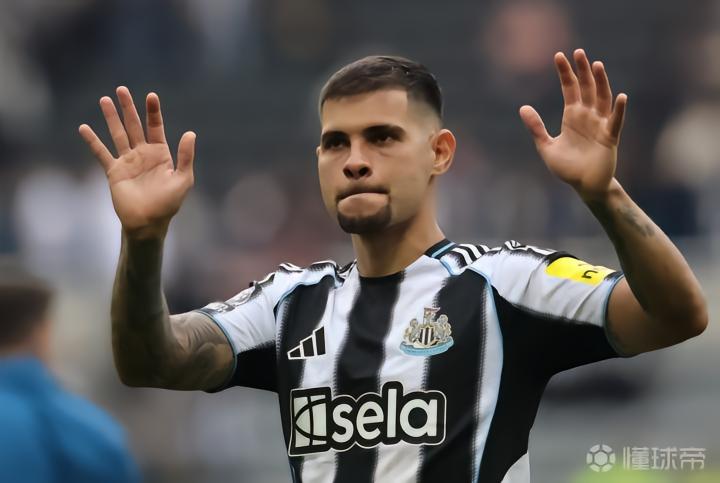
Following the Isak saga and the subsequent failure to secure several top targets, Howe felt it was time for him to leave. However, he remained in his position for two weeks while the club secretly searched for a successor. Jaisl was not a well-established name, but his appointment brought a clear sense of direction: Newcastle United's course would not be compromised.
According to The Athletic, Guimarães is also part of Newcastle United's plan to make changes. Newcastle United were unhappy with Arsenal's early official £45 million bid. Since then, the two sides have had almost no direct contact except through intermediaries, and Newcastle United's attempts to push negotiations forward have made no progress. A source said: "We wanted to push the price to an unrealistic figure. We wanted Arsenal to back down... but they didn't."
At the time, Newcastle United were in La Manga, Spain, for pre-season training, awaiting Al Ahli's approval for Jaisl's departure. Guimarães subsequently joined the club. As one insider put it at the time: "We needed to put this farce to rest."
The £75 million transfer fee for Guimarães wasn't the ideal outcome—they had hoped for a price closer to Tonali's—but considering Guimarães' age and the circumstances at the time, it was "a good result," and was balanced by the funds already raised. More importantly, the money was fully secured, which also resolved the issue of talented but somewhat unruly players in the dressing room.
Newcastle United took a tougher stance on other players. While it was initially expected that teams would pursue Livermore, that interest did not materialize after he suffered injuries during the 2025-26 season.
Besiktas had been pursuing Joseph Willock, and he seemed almost certain to leave, but Jaissle's excellent start after taking over has changed the situation, and a contract extension is still possible. Despite Nottingham Forest's interest, Jacob Murphy has stayed. Pope is also still at Tyneside, although he has been relegated to third-choice goalkeeper and the club had previously listed him as available for sale.
Newcastle United would have considered an offer for Vissa this spring. The striker, who joined from Brentford for £55 million, had a poor start, but the Congolese striker returned from the World Cup full of confidence and has had a good start to the new season.
However, it was Walter Madd who left, the player who joined for a club-record £64 million. The German's departure wasn't unexpected, as his book value remains high, but he was clearly less suited to Jaissler's style of football, and even less compatible than Eddie Howe's system. Newcastle United hope he can have a positive season at Juventus and regain his market value. Newcastle United insist that the deal will still be profitable after accounting for wages and loan fees.
When the transfer window closed, Newcastle United's squad average age and total wages had both decreased significantly.
There are many ways to "get things in order," and being quick is key.
In terms of player recruitment, Newcastle United had a lackluster start to the summer but a very eventful finish. Early setbacks in their pursuit of several high-profile targets did little to alleviate the fans' anxiety.
According to the club's management, the problem with the outside impression of Newcastle United at the beginning of this summer mainly stemmed from a necessary but unavoidable "sequence arrangement," and they pleaded with fans to "wait until September 2nd to evaluate us."
Newcastle United completed their first signing ahead of the World Cup, bringing in Evan Javan from Reims for £18.5 million. This deal to sign a 20-year-old goalkeeper continues the club's strategy of recruiting young talent.
This approach has excited fans, especially since the deal for Victor Muñoz seems to be finalized. Newcastle United insists they have reached an agreement with Osasuna, the player himself, and his agent, and have even arranged for a team to be on standby in the United States to complete his medical during the World Cup.
Liverpool's last-minute hijacking of the deal was a major blow, as 19-year-old winger Zadok Johanna had opted for Brighton over Newcastle United. For some fans, this was reminiscent of the Ekittik hijacking last year. Newcastle United subsequently reviewed the transfer to try and understand what exactly happened.
Howe was disappointed that his ideal replacement for Gordon had left, but he didn't blame anyone and knew that Newcastle United would still have problems against the "Big Six." Newcastle quickly turned to signing Bazumana Dur from Hoffenheim for £43 million. The club had high hopes for him, but the 20-year-old still needed development, and Howe also felt he wasn't ready to start at the beginning of the season.
Four days later, Stoyle joined for £20.1 million, which gave Howe some encouragement. The 18-year-old still needs time to adapt, but Howe and the entire Newcastle United team see his potential to become a star.
This recovery didn't last long. As soon as news broke that Guimarães wanted to leave, Newcastle United's top target for all positions, Manzanby, almost immediately chose Aston Villa at the last minute.
Like Muñoz, Newcastle United's management initially thought they had convinced Manzanby to join; other insiders were more skeptical, believing "something was off from the start." One executive even flew from Los Angeles to Vancouver to meet with the player's family after Switzerland's World Cup match against Canada.
Following the Manzanby incident, some within Newcastle United felt that a portion of the fans had "fallen into an emotional abyss," and Howe himself was nearly pushed to the brink. Considering Guimarães' potential departure, he felt it would be difficult to succeed with an inexperienced squad, especially after missing out on three top targets – long-time goalkeeper James Trafford opted for Leeds United – and some fans already had little patience for the manager. His temper had run out.
Eddie Howe wasn't the only one to leave. Steve Nixon, who had long served as head of recruitment, resigned in mid-June and subsequently agreed to join Championship side Wrexham United. Eddie Howe's nephew, veteran football executive Andy Howe, stayed on after the manager's departure.
Despite Eddie Howe's deep involvement in the first three signings, these moves were all part of the club's overall strategy. Newcastle United sought a like-minded successor and paid Al Ahli approximately €10 million to sign Jaisl, demonstrating their strong belief in his potential.
Araghi Bamba joined from Monaco while Howe was still in charge, for an initial transfer fee of £30 million. 20-year-old Johan Jornieczyk was also one of the signings during the managerial transition period; Newcastle United's data team considers him a future world-class goalkeeper. The club activated Jornieczyk's €30 million release clause before Jaissle's official announcement, ending their summer-long plan to sign a new goalkeeper, which had been a priority this summer.
After Jaisl's arrival, he determined that the newly modified 4-2-3-1 formation still needed to strengthen three positions: full-backs, defensive midfielders, and forwards, whether it was a versatile striker or a number 10.
Besiktas' Dedic was already being discussed within Newcastle United before Jaissler took over. Dedic previously worked under the German coach at Red Bull Salzburg, making him a natural £30 million transfer target. Newcastle's full-back depth is already limited, and Jaissler is confident the 24-year-old's athleticism is a perfect fit for the team. The club included a left-back in their plans during the summer transfer window, but Newcastle believes Dedic and Lieframento can both play on the wings, providing sufficient coverage.
The search for a number 6 hasn't been smooth sailing. Guimarães' departure has left Newcastle United lacking in both experience and creativity. For Jaisl, a defensive midfielder, preferably with experience in England's top flight, is a must-have.
Throughout the summer, the club considered several players with varying degrees of seriousness. Tottenham's Lucas Belliva and Archie Gray, Stuttgart's Stiller, Brighton's Carlos Bellabara, Botafogo's Danilo, and Eintracht Frankfurt's Hugo Larsson were all on the list. Newcastle United also inquired about the possibility of a transfer for Porto's Froholt.
Newcastle United made an offer to Marseille for Højbjerg in early August, but the 31-year-old rejected the transfer. Newcastle officials also tried to persuade Bayern Munich's Palinha, also 31, to move to Tyneside, but he wanted to return to his home country.
Ultimately, Nicolas González emerged as the most suitable signing, with a transfer fee of £48 million. The club had kept him on their shortlist, but at the time it was uncertain whether he would enter the market. Nicolas González was Newcastle United's only signing from within the English top flight this transfer window. At 24 years old, with room for growth and a solid resume, Newcastle United considered him the ideal signing of the transfer window.
Within the club, some jokingly referred to this "speed plan" as "Project Speed," a name borrowed from the Looney Tunes character "Speedy Jim." The plan was later successfully completed.
Newcastle United's decision to introduce Nicolas González to the fans at St. James' Park ahead of their League Cup match against West Bromwich Albion was a clever move. It capitalized on the positive atmosphere following the training ground announcement and their first-round draw against Liverpool. However, Newcastle United are not content with this, and with Walter Madd now available for sale, the club has begun its search for a striker.
Interestingly, Fernandes Pardo has always been highly regarded by Eddie Howe. Newcastle United would have considered him their top target if it were May, but he initially preferred playing in the Champions League. Newcastle United also considered the striker last summer, and in the final 10 days, the club saw renewed hope of completing the deal.
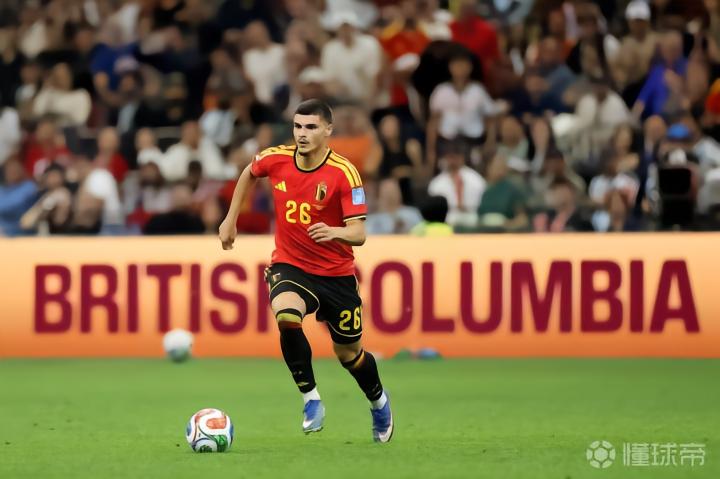
Stuttgart's Hannes was also discussed as a number 10, but Newcastle United's real focus has always been Fernandes Pardo. After previous remote contacts between the clubs failed to yield results, the club's management traveled to Lille via Eurostar and finalized an initial deal worth €60 million on Monday. The 21-year-old then flew to Tyneside and completed a medical that evening.
Newcastle United maintain that Fernandez Pardo is "the final piece of a plan that has been going on all summer," and his arrival has pushed the club's spending capacity to the limit. They had previously discussed "saving ammunition," but now, without selling players first, they have very little room for new signings in the winter transfer window. However, Newcastle United are not on the brink of a financial cliff. An insider said, "We're not sitting here worrying about who we have to sell."
Newcastle United have been very active this summer, hoping to build a team that can grow together and lay the foundation for a return to European competition. In the long term, Hopkinson's grand vision is for the club to "continuously and convincingly compete for the top prizes."
To do this, they must be different, they must start anew, and they must be tested by their beliefs.